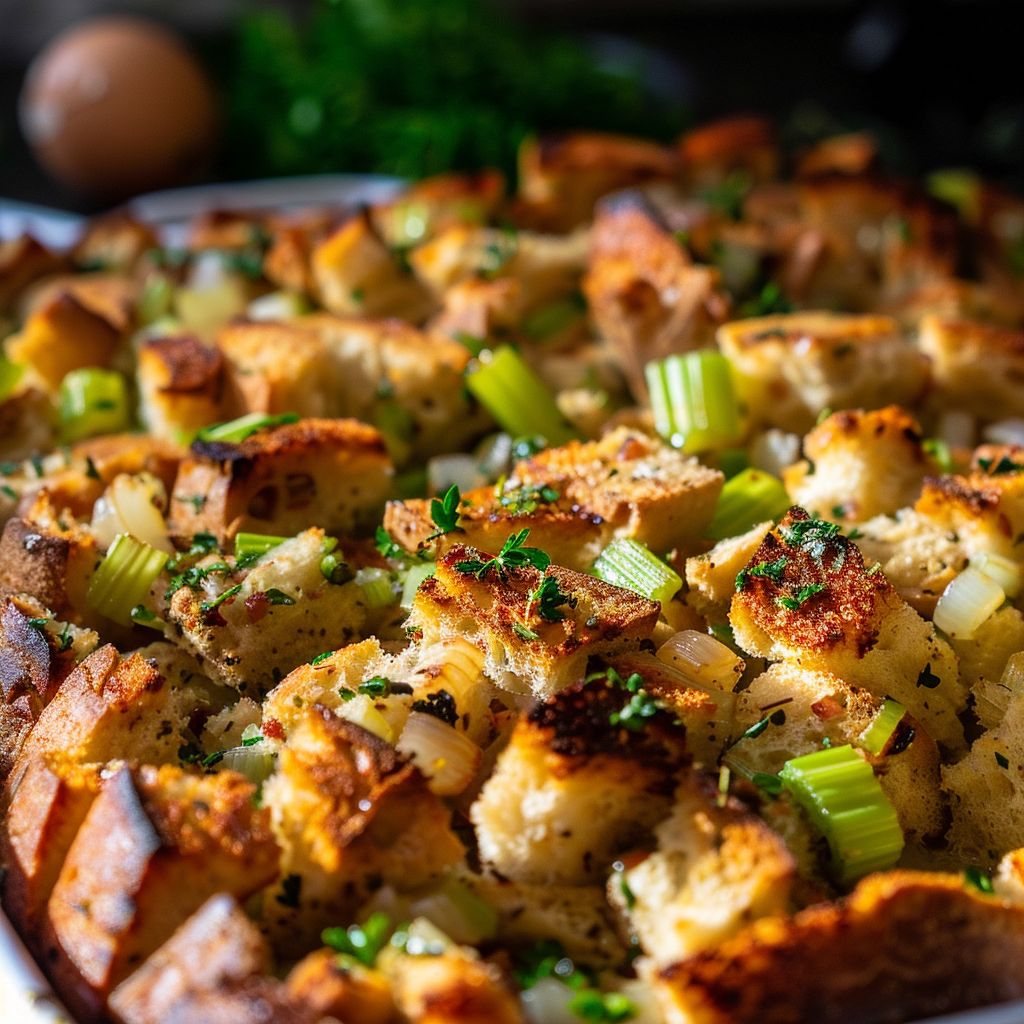
Unlocking the Secrets of Thanksgiving Turkey Stuffing
Thanksgiving is a time for family, gratitude, and, most importantly, food. One dish that often steals the spotlight is the stuffing, especially when it’s nestled inside the turkey. In this article, we will explore the science behind Grandma’s Thanksgiving turkey stuffing, breaking down the essential components that make it the ultimate side dish. From understanding the Maillard reaction that creates flavor depth to perfecting moisture retention, we will dissect every variable to ensure your stuffing is a showstopper this holiday season.
Why You’ll Love This Recipe
- Deliciously Flavorful: The combination of sautéed onions, celery, and aromatic herbs creates a flavor profile that dances on your palate.
- Moist, Yet Crispy: This stuffing achieves the perfect balance between a moist interior and a crispy top layer, thanks to expert baking techniques.
- Flexible Ingredients: You can easily substitute ingredients to fit dietary restrictions or personal preferences, making this stuffing versatile for all guests.
- Make-Ahead Friendly: Prep your stuffing a day in advance, allowing the flavors to meld beautifully before the big day.
- Educational Experience: You’ll gain insights into the science of cooking as we explore the why behind each step, empowering you to become a culinary wizard.
Ingredients Breakdown
Understanding your ingredients is key to achieving the best stuffing. Here’s what you’ll need, along with possible substitutions:
- 1 loaf of day-old bread: White or whole wheat works best. You can also use gluten-free bread for a gluten-free version.
- ½ cup unsalted butter: Essential for flavor and moisture. Olive oil can be used as a substitute for a dairy-free option.
- 1 large onion, diced: Sweet onions like Vidalia add depth. Shallots can also be used for a milder flavor.
- 3 celery stalks, diced: Adds crunch. You can also incorporate fennel for a unique twist.
- 2 garlic cloves, minced: Garlic enhances flavor. Consider roasted garlic for a sweeter taste.
- 1 ½ cups chicken or turkey broth: For vegetarian or vegan versions, use vegetable broth.
- Herbs: 1 tsp dried sage, 1 tsp dried thyme. Fresh herbs can elevate the flavor even further.
- ½ tsp salt and ¼ tsp black pepper: Essential for seasoning. Adjust to taste!
- 1 large egg, beaten: This acts as a binder for the stuffing. For a vegan alternative, use flaxseed meal mixed with water.
- Fresh parsley for garnish (optional): Adds a pop of color and freshness.
Pro Tips for Perfect Stuffing
Here are some expert insights to ensure your stuffing is a triumph:
- Use Stale Bread: Day-old bread is crucial as it absorbs moisture without becoming mushy. If your bread is fresh, dry it out in the oven first.
- Don’t Overmix: When combining ingredients, mix just until incorporated to keep the texture light and airy.
- Temperature Matters: Ensure your stuffing reaches an internal temperature of 165°F (74°C) for safety.
- Cover When Baking: If baking outside the turkey, cover your baking dish with foil to retain moisture, removing it later for crispiness.
- Flavors Improve with Time: Preparing your stuffing a day ahead allows flavors to meld, enhancing the overall taste.
- Experiment with Textures: Add nuts or dried fruits for unexpected crunch and sweetness.
- Fresh Herbs: Use fresh rather than dried herbs when possible for a vibrant flavor boost.
- Moisture Control: Adjust the amount of broth based on the bread used; denser breads may require more liquid.
- Seasonal Touches: Incorporate seasonal vegetables like mushrooms or butternut squash for a unique twist.
Avoiding Common Mistakes
Even the best of us can stumble. Here are common pitfalls and how to avoid them:
- Too Wet or Too Dry: If your stuffing is too wet, add more bread. If too dry, drizzle additional broth.
- Underseasoning: Don’t be afraid to taste as you go. Proper seasoning is crucial for depth of flavor.
- Packing Too Tightly: If stuffing inside the turkey, do not pack tightly to allow for even cooking.
- Ignoring Rest Time: Let the stuffing rest after baking to allow flavors to settle and moisture to redistribute.
Flavor Variations
Customization is key to making this stuffing your own. Here are some variations to consider:
- Apple and Sausage Stuffing: Add diced apples and cooked sausage for a sweet and savory profile.
- Mushroom and Herb Stuffing: Incorporate sautéed mushrooms and a variety of fresh herbs for an umami-packed version.
- Chestnut and Cranberry Stuffing: Add roasted chestnuts and dried cranberries for a festive touch.
- Vegetarian Mediterranean Stuffing: Use olives, sun-dried tomatoes, and feta for a Mediterranean flair.
Storage and Make-Ahead Instructions
Planning ahead can ease your holiday stress:
- Refrigerate: Store unused stuffing in an airtight container for up to 3 days.
- Freezing: You can freeze stuffing for up to a month. Thaw in the refrigerator before reheating.
- Reheating: Add a splash of broth when reheating to maintain moisture.
Frequently Asked Questions
Let’s address some common queries regarding Thanksgiving stuffing:
- Can I prepare the stuffing ahead of time? Yes! Prepare it a day in advance and refrigerate.
- Should I stuff the turkey with the stuffing? You can, but ensure it reaches an internal temperature of 165°F (74°C).
- Can I make this stuffing gluten-free? Absolutely! Just use gluten-free bread and broth.
- Can I bake this stuffing without a turkey? Yes, bake it in a greased baking dish as instructed.
- How do I keep the stuffing moist? Adding broth and avoiding overbaking are key.
- What’s the best bread for stuffing? Sturdy breads, like sourdough or French bread, work best.
- How can I enhance the flavor? Add fresh herbs, spices, or sautéed vegetables for depth.
- Can I double this recipe? Yes, just adjust baking time as needed and ensure even cooking.
Nutritional Insights and Dietary Adaptations
Understanding the nutritional content can help you make informed choices:
- Calories: Approximately 200 calories per serving, depending on ingredients.
- Protein: A good source of protein, especially with the addition of sausage or turkey broth.
- Fiber: Whole grain bread increases fiber content, aiding digestion.
- Dietary Restrictions: Easily adaptable for gluten-free, dairy-free, and vegetarian diets.
Essential Equipment Recommendations
To achieve the best results, consider using:
- Large Mixing Bowl: For combining all ingredients easily.
- Skillet: A large skillet for sautéing vegetables.
- Baking Dish: A 9×13-inch baking dish is ideal for baking outside the turkey.
- Meat Thermometer: Essential for checking the stuffing’s internal temperature.
Serving Suggestions
Finally, let’s discuss how to present your stuffing:
- Garnish: Fresh parsley adds a vibrant color and freshness.
- Pairing: Serve alongside roasted turkey, cranberry sauce, and gravy for a complete Thanksgiving meal.
- Side Dishes: Complement with green beans, mashed potatoes, or a fresh salad.
With this comprehensive guide, you’re now equipped to create a mouthwatering Thanksgiving turkey stuffing that will impress your family and friends. Remember, the kitchen is your laboratory—experiment with flavors, textures, and techniques to make this dish uniquely yours. Happy cooking and happy Thanksgiving!


Grandma’s Thanksgiving Turkey Stuffing
Ingredients
Method
- Preheat oven to 350°F (175°C). Grease a 9×13-inch baking dish if baking outside the turkey.
- Melt butter in a skillet, sauté onion and celery until softened, then add garlic for 1 minute.
- Mix bread cubes with sautéed vegetables, sage, thyme, salt, and pepper in a large bowl.
- Pour broth over mixture, add beaten egg, and stir well.
- Transfer to baking dish, cover with foil, and bake for 30 minutes. Remove foil and bake 10-15 minutes until golden.
Notes
Loved this recipe? Save it to your favorite Pinterest board so you can easily find it later! ✨